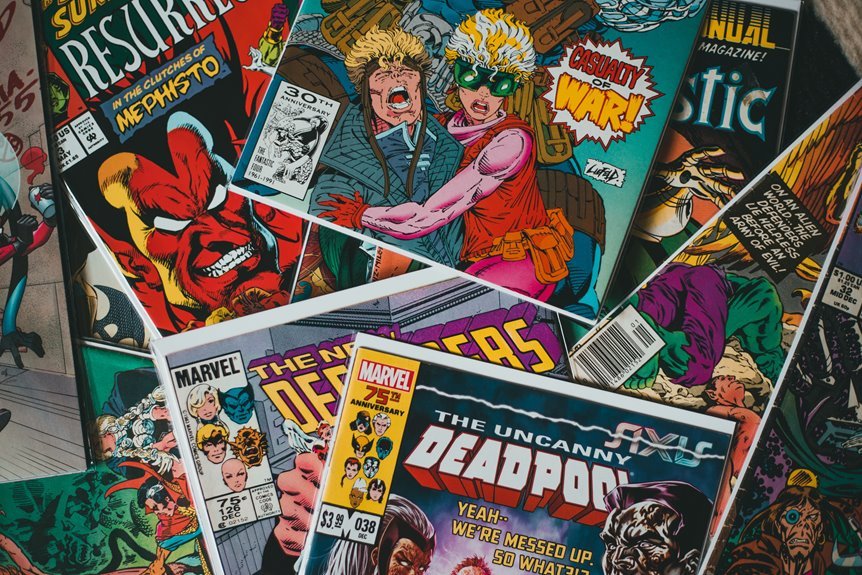
Light novels center on expansive prose and interiority, while manga foregrounds visual pacing and artwork. In prose, world-building breathes through description and voice; in panels, meaning shifts with framing and sequence. Serialization affects cadence: prose may linger, manga often compacts. Fans weigh texture against immediacy and collaboration between image and text. The choice hints at a broader question about interpretation itself, leaving one to ask how each form shapes perception when genres intersect.
What Sets Light Novels Apart From Manga
Light novels and manga occupy adjacent yet distinct ecosystems within Japanese storytelling, with each medium shaping narrative delivery through its chosen medium. The distinction lies in prose-driven exposition and internalization versus visual recreation and sequence.
Storycraft differences emerge in narration and world-building density, while pacing immersion hinges on reader interpretation, tempo, and blank space; these elements guide tonal nuance, reader agency, and interpretive engagement beyond artwork alone.
How Storytelling Feels: Prose vs Visual Narrative
In moving from the comparison of how light novels and manga differ structurally, the focus shifts to the experiential texture of storytelling itself. The analysis examines how prose pacing shapes interiority, while visual implication frames scene perception. Detached observation highlights how narrative voice and artwork collaborate or clash, influencing reader agency, immersion, and interpretation, without overstating authorial intent or reader guesswork, sustaining contextual rigor throughout. prose feel, visual rhythm
Reading Habits, Formats, and Serialization
Reading habits around light novels and manga reflect distinct formats and serialization practices that shape consumption patterns.
Formats, pacing, and release cadence drive reader engagement, with light novels leaning on prose-driven world-building and episodic arcs, while manga emphasizes visual pacing and chapter-based serialization.
Imagery expectations and pacing differences guide serialized anticipation, platform accessibility, and reader commitment, influencing preference without conflating media boundaries.
How Fans Choose Between Them (And When to Enjoy Both)
Fans often weigh format-specific strengths when choosing between light novels and manga, considering how prose-driven world-building versus visual storytelling aligns with their goals, time constraints, and preferred immersion level.
The choice hinges on insider accessibility and adaptation timelines: readers seek easy entry points and predictable release cadence.
When beneficial, enjoying both offers cross-format insights, fostering flexible engagement and broadively tailored pacing.
Frequently Asked Questions
Do Light Novels Have Illustrations and How Frequent Are They?
Illustrated presence exists, with illustration frequency varying by series; some light novels include occasional art, others feature frequent illustrations. Author involvement ranges from minimal to significant, shaping style, pacing, and the balance between text and visuals.
Which Format Is Cheaper Long-Term for a Reader?
The cheaper long-term format is often liberating formats with ongoing access; physical manga purchases tend to incur repeated costs, while digital or serialized releases акт provide economical tradeoffs, yet licensing and platform fees influence the overall economic tradeoffs for readers.
Can Manga Adapt a Light Novel Accurately?
Manga can adapt a light novel with high fidelity, though adaptation vs fidelity depends on pacing and visual interpretation, balancing audience expectations against core narrative beats and character arcs within a condensed, cinematic framework.
How Do Pacing Differences Affect Plot Comprehension?
Ironically, pacing differences sharpen perception: pacing impact subtly shapes how readers assign meaning, while narrative clarity often fluctuates. The analysis shows that altered tempo can both reveal and obscure plot threads, challenging readers seeking freedom to interpret contexts.
Are Spin-Offs Common Between Light Novels and Manga?
Spin-offs are common, illustrating a contrast between spin offs vs adaptations and marketing strategies. The phenomenon reflects deliberate expansion practices, where publishers test audiences, broaden franchises, and monetize through cross-media synchronization, while maintaining narrative integrity and targeted demographic reach.
Conclusion
In summation, light novels and manga offer distinct but complementary storytelling modalities, each shaping tempo, immersion, and interpretation through prose maximalism versus visual sequencing. The choice hinges on reader preference for interiority and pacing or for kinetic imagery and collaborative meaning. As formats intertwine, fans often sample both to savor world-building from prose and mood through illustration, much like two lenses on a single landscape—one capturing depth, the other capturing movement. {simile: like a prism refracting light into multiple textures}