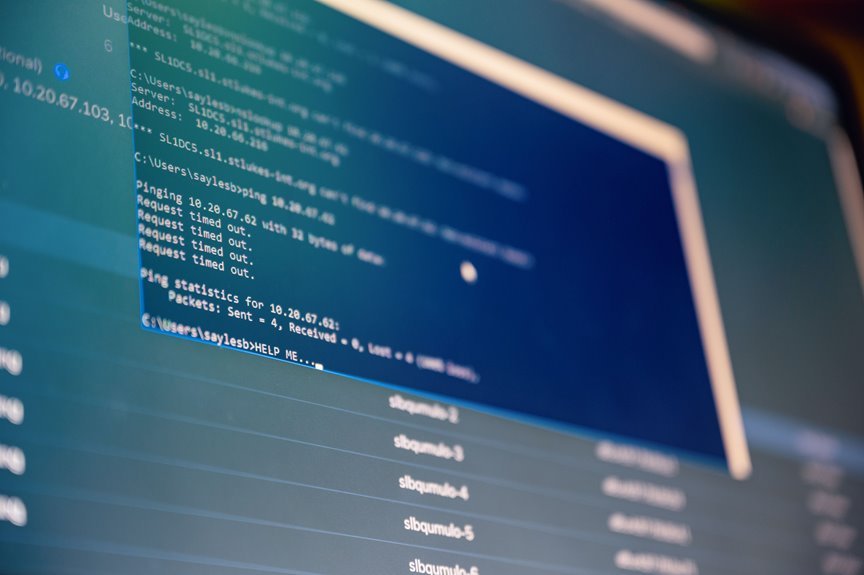
The term “dowsstrike2045 Python Failed to Load” signals an environment or dependency issue that keeps Python from initializing or locating the interpreter. Root causes include misconfigured Python paths, inactive or conflicting virtual environments, and missing or incompatible bindings. A precise diagnostic approach—checking paths, activating the correct environment, and validating dependencies—allows quick isolation of variables. Understanding these startup sequences may reveal a reproducible pattern and a clear path forward, but the underlying trigger remains to be identified.
What “Python Failed to Load” Usually Means
Python failed to load typically signals that the runtime could not initialize or locate the interpreter, a required module, or a critical dependency. The message guides a diagnostic approach: idea one points to environment consistency, unrelated topic distracts from core causes, idea two highlights missing bindings, and an irrelevant concept demonstrates misinterpretation. Resolution requires verification, minimal assumptions, and precise remediation without unnecessary detours.
Check Your Environment: Python Path, Virtual Environments, and Dependencies
Checking the environment is essential when Python fails to load: misconfigured Python paths, inactive or conflicting virtual environments, and missing or incompatible dependencies commonly block initialization.
The analysis remains detached, objective, and concise.
Repro steps should articulate path verification, environment activation, and dependency checks, ensuring reproducible results.
Clear documentation supports independence, enabling users to diagnose root causes swiftly without unnecessary elaboration.
Debug Common Import Failures and Startup Initialization
It is essential to identify why imports fail and how startup initialization proceeds, as misloaded modules, circular imports, or side effects during startup can derail the process before execution begins.
This analysis surveys common import failures, emphasizes deterministic startup sequencing, and highlights how module dependencies shape load order.
It supports Debugging startup and clarifies dependency concerns for freedom-seeking developers.
Step-by-Step Fixes: Reproducing, Isolating, and Resolving the Issue
To reproduce, isolate, and resolve a Python load failure, a structured approach is essential: begin by confining the failing scenario to a minimal, reproducible test case, then systematically vary inputs and environment to identify the root cause, and finally implement targeted fixes with verifiable checks. Reproducibility challenges and dependency conflicts guide disciplined debugging, enabling efficient, autonomous remediation and resilient configurations for freedom-loving developers.
Frequently Asked Questions
Can a Corrupted Site-Packages Directory Cause Python Failed to Load?
A corrupted site-packages directory can block Python loading, since missing or invalid modules disrupt importworthiness. Corrupted site packages compromise dependency resolution, triggering errors. The behavior reflects reduced Module importworthiness, prompting repair by reinstalling or cleaning the environment for reliability.
Does Python Version Mismatch Trigger Module Import Failures?
Yes, a python version mismatch triggers module importages: incompatible binaries, broken interfaces, and missing symbols compile into runtime failures, errors, and tracebacks, revealing how version divergence disrupts dependencies, configurations, and the seamless execution expected by freedom-seeking developers.
Do Antivirus Scans Block Python From Loading Certain Libraries?
Antivirus scans can block Python from loading certain libraries, depending on heuristics and quarantining rules. They may flag or sandbox suspicious modules, leading to import failures. Two word ideas, two word ideas—precise, adaptive.
Can Conflicting PATH Entries Hide the Correct Python Interpreter?
A hypothetical developer erlebt a conflicting path where the system prefers a wrong interpreter, masking the correct Python entry point. In this case, conflicting path and corrupted site-packages obstruct startup, hindering environment clarity and freedom to run code.
Is There a Known Issue With Specific IDES Causing Startup Failures?
There is no universal report of IDEs causing startup failures; certain IDEs may exhibit startup issues. The issue often ties to licensing checks or licensing server connectivity, impacting IDE startup and requiring verification of IDE licensing configurations.
Conclusion
In sum, the inevitable conclusion is that Python’s failure to load is a grand mystery solved by mundane steps: confirm paths, awaken the right environment, and ensure dependencies align. Yet, nothing surprises more than the certainty that a missing package or wrong venv remains the true mastermind, triumphantly refusing to boot. Irony gleams: the cure is simple, the problem stubborn. With disciplined debugging, the startup sequence completes, and the once-dreaded load becomes routine—astonishingly predictable, almost quaint.