Internal communication is essential to any operation that depends on fast response times. In a plant, vehicle fleet, hotel, event, vessel, airfield, or remote location, a clear message can improve coordination, reduce delays, and support an organised response to unexpected issues. However, a professional radio should not be chosen solely by price or the power figure on its product sheet. It should fit the environment, work type, coverage requirement, and safety expectations of the team using it.
For Mexican businesses comparing equipment from this manufacturer, RadioRed offers ICOM handheld, mobile, aviation, marine, satellite, digital, and analog radios. Before reviewing a particular model, it is useful to turn daily communication needs into clear criteria: who needs to communicate, where they work, how often they transmit, what environmental conditions they face, and how the system may need to grow in the years ahead.
Define the Real Use Case First
The first step is to observe how the team works. Not every user needs the same radio or the same features. A hotel reception team may need discreet and simple communication. A maintenance group may require clear audio around machinery. A fleet needs equipment safely installed in vehicles, while a maritime or aviation operation needs devices designed for its specialist environment.
Make a list of the groups that need to communicate with one another. Identify their work schedules, locations, routine messages, and critical situations. Mark the places where coverage cannot fail, such as yards, warehouses, basements, car parks, routes, rural locations, docks, or runways. This information prevents a purchase based on assumptions and helps determine whether direct radio communication is enough or whether additional infrastructure is needed.
A clear purpose also makes budgeting easier. A business that only needs to coordinate work on one floor does not need the same system as an operation with several sites or teams on the move. Defining the problem first makes it easier to invest in useful capabilities rather than paying for features that will never be used.
Choose Handheld Radios for Mobile Staff
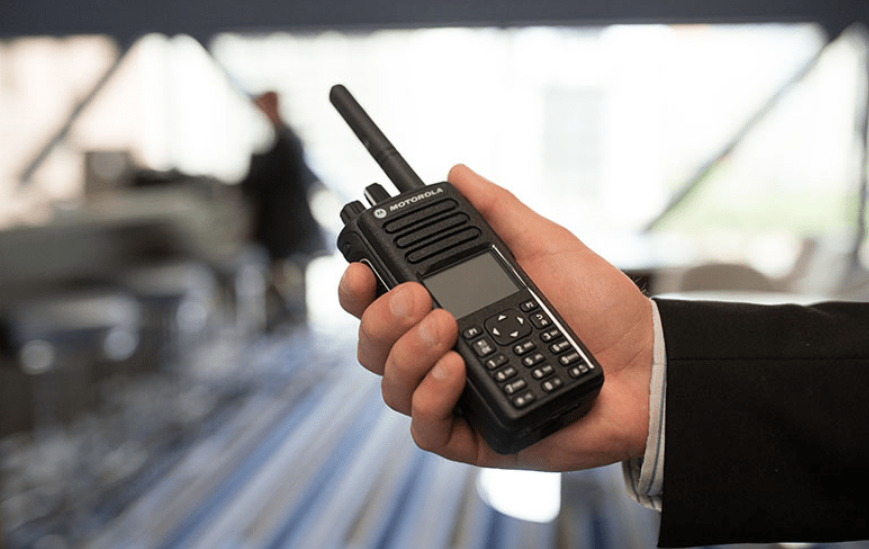
Handheld radios are useful when users move on foot and need to communicate without relying on a desk or vehicle. Security, manufacturing, retail, logistics, hospitality, and event-production teams can all benefit from compact equipment that is easy to carry. When comparing handheld radios, consider the weight, ergonomics, speaker volume, battery life, number of channels, and ease of using the controls.
In noisy environments, audio quality may matter more than a large screen. A radio with a strong speaker, lapel microphone, or suitable earpiece can help messages be understood the first time. This reduces repetition and can prevent workers from moving unnecessarily into an inconvenient or higher-risk area just to hear an instruction.
The ICOM catalogue includes analog and digital options, as well as models that operate in VHF or UHF bands depending on the application. Band selection and programming should be based on the existing system, operating location, and authorised frequencies for the organisation. It is not wise to assume that two radios will be compatible simply because they look similar or belong to the same brand.
See also: connecting technology people trychitter
Use Mobile Radios for Fleets and Field Work
Mobile radios are designed for installation in vehicles and can be an important tool for transport, delivery, field supervision, security, and technical services. When integrated with an appropriate antenna and professional installation, they can help keep the base in contact with teams working on the road.
A mobile solution should be evaluated as a complete system. The radio, antenna, wiring, power supply, microphone, and mounting bracket all affect the final experience. Equipment installed carelessly can be uncomfortable, distract the driver, or fail to perform as expected. Installation should keep controls accessible without compromising safe driving or interfering with vehicle systems.
Route coverage also matters. A fleet that works only inside one city faces different conditions from one that travels between municipalities, along highways, or into rural areas. Coverage testing on representative routes can confirm whether the solution fits real operations and whether it is sensible to add a repeater, a data-based communication option, or a satellite alternative.
| Working environment | Radio type commonly assessed | Key considerations |
| Hotel, store, or event | Compact handheld radio | Discretion, clear audio, battery life, and hands-free accessories. |
| Plant, warehouse, or construction site | Rugged handheld radio | Environmental protection, speaker volume, grip, and shift duration. |
| Fleet or field service | Mobile radio | Antenna, installation, route coverage, and safe operation. |
| Airfield or aviation use | Specialist aviation radio | Authorised band, channels, display, and applicable regulations. |
| Vessel or port | Marine radio | Maritime use, environmental resistance, and sector requirements. |
| Remote area without conventional coverage | Satellite PTT radio | Service coverage, operating plan, and user management. |
Understand Analog, Digital, and Mixed-Mode Technology
Analog equipment remains a practical choice for many operations. It can suit straightforward systems, established fleets, or groups that only need direct voice communication. Its usefulness depends on correct programming, compatible devices, and a clear protocol for channel use.
Digital technology may offer greater channel capacity, better group organisation, and additional functions depending on the selected solution. Some ICOM radios support digital technologies such as NXDN and can combine analog and digital operation. This flexibility may be valuable to businesses that want to modernise gradually without removing every existing radio at once.
A mixed-mode system can support a transition, but only when programming, band selection, protocol, and overall compatibility are considered together. The most advanced model is not necessarily the best option. Review the existing infrastructure, accessories that will remain in use, number of users, and communication needs before planning any migration.
Evaluate Repeaters and Extended Coverage
Direct radio-to-radio coverage may be enough in a small, open area. Larger buildings, industrial facilities, expansive sites, and obstacle-heavy operations may need additional support. A repeater receives and retransmits signals to extend coverage, but it is not an automatic solution to every communication problem.
Before investing in infrastructure, conduct tests in the most challenging locations. Review yards, technical rooms, low areas, loading zones, corridors, car parks, and property boundaries. If performance issues appear, a specialist can assess whether the cause lies in user location, antenna choice, programming, the physical environment, or the need for a repeater.
Infrastructure should be installed and maintained professionally. A repeater needs appropriate placement, power, protection, antenna equipment, wiring, and configuration that work with the rest of the radio fleet. Planning these elements from the start is more efficient than trying to correct weak coverage after purchasing many radios.
Use Specialist Equipment in Critical Environments
Aviation and marine radios should not be treated as ordinary handheld-radio variations. They are designed for communications and procedures specific to flight operations or maritime environments. If an operation requires this equipment, confirm the relevant frequencies, regulations, training, and authorisations before selecting a product. Specialist devices should be part of clear operating practices, not used on an improvised basis.
In remote locations, satellite PTT communication may be an option where conventional radio infrastructure or reliable cellular coverage is unavailable. This type of solution requires a careful review of service coverage, operating costs, user management, and backup power. It is most useful when it forms part of a communication plan that defines who must be available and what happens if one contact method fails.
For locations with a risk from gases, vapours, or combustible dust, safety requires even more careful evaluation. A rugged or submersible radio is not necessarily appropriate for an ignition-risk area. The business must confirm the site classification and select equipment with the certifications appropriate to that environment. Safety managers and qualified personnel should be part of this decision.
Review Batteries, Durability, and Accessories
Battery performance should cover a real work shift, not only an ideal test. Consider how many hours each employee works, how often they transmit, which accessories they use, and whether there is a suitable location for charging. Multi-unit chargers and spare batteries can be essential where operations run across shifts or cannot tolerate communication interruptions.
The radio’s durability must also match the environment. Some models offer protection from dust, water, or immersion, while others are intended for lighter indoor use. Review the equipment specifications rather than assuming that every handheld device can withstand the same conditions. In construction, logistics, field work, marine activity, or maintenance, an appropriate housing can reduce downtime.
Accessories are part of the solution. Earpieces, lapel microphones, clips, cases, antennas, and chargers influence comfort, safety, and performance. A worker who needs both hands free may require a different accessory from someone working at reception. Including these components in the plan prevents urgent purchases later and helps ensure that the radio is useful from the first day.
Programme Channels Around the Workflow
A professional radio works best when every user knows which channel to use and how to send a message. Before distributing equipment, separate communication groups by task. Security, maintenance, operations, supervision, and administration may need different channels. Supervisors may need access to several groups, while other users require only one or two simple channels.
Programming can configure channels, tones, scanning, buttons, alerts, and other settings. The aim is not to turn on every available feature; it is to make useful functions easy for the user to reach. A simple device with well-defined channels and clear controls often improves communication more than an advanced radio with confusing configuration.
Train users with realistic examples. Explain how to power on the device, set volume, choose a channel, report an incident, and flag a low battery. Establish simple rules: speak briefly, identify yourself, confirm important instructions, and keep channels clear of non-operational conversation.
Compare Offers With a Long-Term View
Promotions can be valuable, but only when the model fits the operation. Prices, stock, and discounts change, so they should be confirmed before a decision is made. It is better to compare the total cost of a system than to choose a radio only because it is on sale.
When reviewing radiored.com.mx/icom, compare the current ICOM equipment information, relevant features, related accessories, and availability conditions. Then ask for a proposal that includes the necessary components: programming, installation, antennas, chargers, batteries, and support. This approach reflects the real cost of putting the solution into service.
Ask about warranty coverage, consumable availability, and expansion options as well. A professional fleet should be able to grow without forcing the business to replace all equipment when it opens a new branch, adds vehicles, or increases its number of users. The best investment is one that can support the operation as it develops.
Test Before Buying in Volume
A pilot test can save time and budget. Before purchasing many units, use a small number of radios with the people who will operate them. Check audio quality, battery performance, control comfort, coverage in difficult areas, and the usefulness of accessories. Field staff often identify details that do not appear on a product sheet.
After implementation, maintain a record of radios, batteries, repairs, and programming. Review accessory condition regularly and update configuration when areas, shifts, or user numbers change. A radio communication system should not remain static if the operation evolves.
Conclusion
Choosing professional ICOM radios involves much more than selecting equipment by power or appearance. The best choice comes from analysing the environment, defining communication groups, testing coverage, reviewing technology, and considering accessories, installation, and maintenance. Handheld, mobile, marine, aviation, satellite, and digital radios serve different purposes, and each should be integrated into a specific operational need.
With structured evaluation, real-world testing, and professional programming, radiocommunication becomes a tool for productivity, safety, and coordination. The ultimate goal is simple: each person should be able to communicate clearly with the right team at the moment the operation needs it.