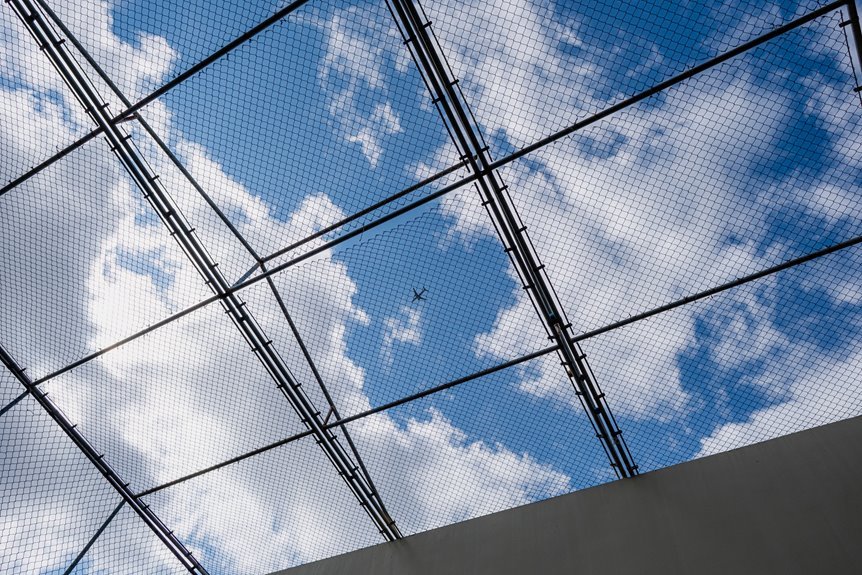
Fly architecture net inside the home proposes a lightweight, embedded fabric of airflow, moisture control, and sensing within walls and ceilings. It favors modular, internal networks over bulky infrastructure, enabling adaptive comfort without overt systems. Walls, floors, and ceilings become interactive canvases that respond to presence, climate, and occupancy with autonomous regulation. The concept raises questions of materials, safety, and energy efficiency, inviting further exploration into how such a breathable, responsive environment might evolve.
What Is Fly Architecture Net Inside the Home?
Fly Architecture Net Inside the Home refers to a design paradigm that integrates a lightweight, interconnected framework of airflow, moisture control, and environmental sensing within residential interiors. Net architecture channels micro-systems into walls and ceilings, enabling responsive comfort without bulky infrastructure. It emphasizes autonomy, fluid adaptability, and breathable fidelity, aligning with a freedom-seeking ethos.
net architecture, inside home; fly architecture, net interiors.
How Net-Like Structures Create Flexible Living Spaces?
Net-like structures enable flexible living spaces by weaving lightweight, modular networks into the fabric of a home. They enable fluid connectivity between zones, adjusting function without rigid partitions. Dynamic grids thread rooms, corridors, and alcoves into a single, responsive topology. Spatial permeability permits reconfiguration with minimal disruption, fostering adaptable routines while preserving coherence, efficiency, and architectural clarity.
Materials, Safety, and Energy (Im)provements for Net Homes
The shift from flexible, net-like organization to integrated performance systems centers on selecting resilient materials, verifying safety protocols, and optimizing energy use within a modular, connective framework.
In net homes, materials safety governs resilience; energy improvements sculpt efficiency without constraining form.
Precise testing, standards alignment, and modular interfaces enable adaptable living.
Freedom-minded readers witness safe, efficient, evolving environments amid design complexity.
Designing Walls, Floors, and Ceilings as Interactive Canvases
Designing walls, floors, and ceilings as interactive canvases translates architectural surfaces into responsive interfaces that integrate form, function, and user engagement. The discussion surveys designing walls, ceilings, floors as adaptable media, enabling expressive spatial narratives. Flexible walls and modular ceilings reimagine containment and expansion, supporting dynamic environments while preserving structure. Precision, imagination, and freedom converge in materialized interfaces, guiding intentional, democratic architectural expression.
Frequently Asked Questions
How Does Maintenance Differ for Flyarchitecture Nets at Home?
Maintenance differences arise in home implementations, where constraints redefine upkeep. Indoor installation requirements demand compact routing, moisture control, and accessible junctions, while performance consistency remains paramount. The detached observer notes proactive inspection, sealing, and modular components supporting freedom within structured limits.
Can Nets Withstand Extreme Weather Indoors?
Weatherproofing indoors, nets can endure but vary; they resist moisture and temp swings, yet extreme indoor weather tests net durability. The answer: with proper indoor weatherproofing, nets maintain integrity, though performance depends on materials, exposure, and maintenance schedules.
What Is the Budget Range for Net Installations?
The budget range for net installations varies, typically aligned with project scope and materials. Budget planning considers system complexity, labor, and permits; installation timing depends on vendor schedules, site readiness, and weather windows, enabling phased, flexible deployment for freedom-minded clients.
Are Nets Child- or Pet-Safe in Daily Use?
Nets safety hinges on proper installation and material testing; nevertheless, in daily indoor usage, they generally prove child- and pet-safe when used as intended, provided adult supervision remains. Coincidence suggests safety requirements align with standardized nets safety guidelines.
How Can Nets Impact Indoor Air Quality Long-Term?
Nets can influence indoor air quality through minor ventilation effects and material emissions; long-term exposure remains generally limited. Net-specific nets compliance considerations and ventilation effects must be evaluated, ensuring installation minimizes obstruction while preserving airflow and occupant freedom to breathe.
Conclusion
Fly architecture net inside the home envisions a modular, breathable fabric of walls, ceilings, and floors, weaving airflow, moisture control, and sensing into a seamless interior ecology. One striking statistic: net-enabled spaces can reduce energy usage for climate control by up to 20–30% through responsive micro-circuits. The design remains precise yet imaginative, treating interior surfaces as interactive canvases that adapt in real time, delivering comfort without bulk and enabling spaces to breathe with occupants.